

Shopify stores grow over time, and that means they’ll need more apps in their stack gradually. A store installs one app to solve a problem; a few months later, another app takes care of a different issue, then someone else tests another app during a campaign and never takes it off. Each addition made sense on its own; the problem starts when they accumulate.
This is why choosing apps from Shopify is not just about finding the best software; it is also about making sure every addition makes sense along with other apps in your stack.
It Usually Starts With a Legitimate Problem
There is always a reason for an app to be installed. Maybe the business needed functionality Shopify couldn’t provide, a repetitive task took too long, or they wanted to improve a specific part of the customer journey.
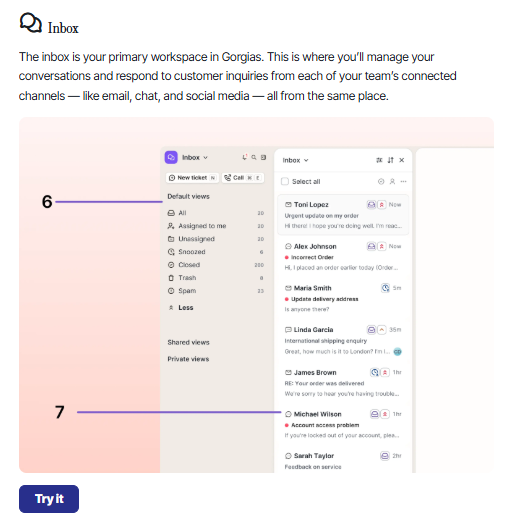
For example, a young, growing store may eventually reach a point where handling customer questions through separate inboxes becomes difficult. Gorgias addressed that problem by putting support conversations and e-commerce information into one helpdesk. Gorgias is being used by a footwear brand named Inkkas for its customer support operations, including its AI tools.
Real-world example: Gorgias provides a customer support helpdesk that brings customer conversations and relevant order information into one workspace, helping merchants manage support requests more efficiently.
Shopify recommends that you should start by asking what your store actually needs and what it could to make it easier to manage the business. The problem will slowly evolve into something different when the original problem is solved, changes, or becomes irrelevant and the app still remains.
This matters because a problem can change over time. Once the original issue is resolved, the business grows, or its processes change, an app that was once necessary may no longer be the right fit. The goal is not simply to find a tool that works today, but to understand why the business needs it in the first place.
Before adding an app, take a look at where the bottleneck actually is. For example, a customer support team might spend hours upon hours of answering order questions, but the real bottleneck could be shipping updates that are difficult to find or order information has to be copied between systems. Adding a helpdesk can centralize conversations. You trace the process from beginning to the end and find out where information gets lost, repeated work, or a specific task depends on another task needed to be completed first. This can help you tell a problem that needs a more connected workflow. The difference matters a lot because the solution should improve how the different parts of the business work.
Then Another App Solves Another Problem
A store’s needs changes as it grows. A new marketing channel creates entirely new requirements to fit the business, more orders could spell potential operations problems, a larger catalog of products creates different merchandising needs. So adding another app can become reasonable to fit those growing needs.
Take a look at Rosemira for example, a skincare business that cancelled multiple subscription tools that did not integrate well with their business. As its operation on subscription became more complex, problems started to come up with its setup such as managing subscriptions, customer service and flexibility. They eventually moved to Appstle to consolidate that part of their business operations.
A brand might need better customer relationship and personalization at a different stage of their growth. Another example is Dermalogica, a global skincare brand under the Unilever Presitge, they use Klaviyo with Shopify for personalization and CRM. Klaviyo reports growth in its CRM revenue over the measured period.
Different businesses have different problems and needs at different stages of their growth. These examples are proof that there is no standard universal list of apps every Shopify store should have. New apps or tools are being added into an existing ecosystem of other apps as a business grows. The issue is that the stack becomes harder to manage because the relationships between those apps inside the ecosystem becomes more complicated.
Eventually, Small Costs Become a Bigger Cost
The same logic applies financially. Businesses can also run into usage-based charges, separate billing, setup work, maintenance, and the staff needed to take care of another system. According to Shopify, some third-party apps charge businesses directly outside of Shopify.
And the cost is not always visible on the billing page. A fragmented setup of app stacks can also create more operational costs. For example, Rosemira had multiple subscription tools that led to poor integration and that made subscription management and customer service more difficult to handle.
The important question is asking if the combined stack is producing enough value to justify the cost. A tool that saves tons of hours of work, improves the customer experience, or makes meaningful revenue can justify that expense.
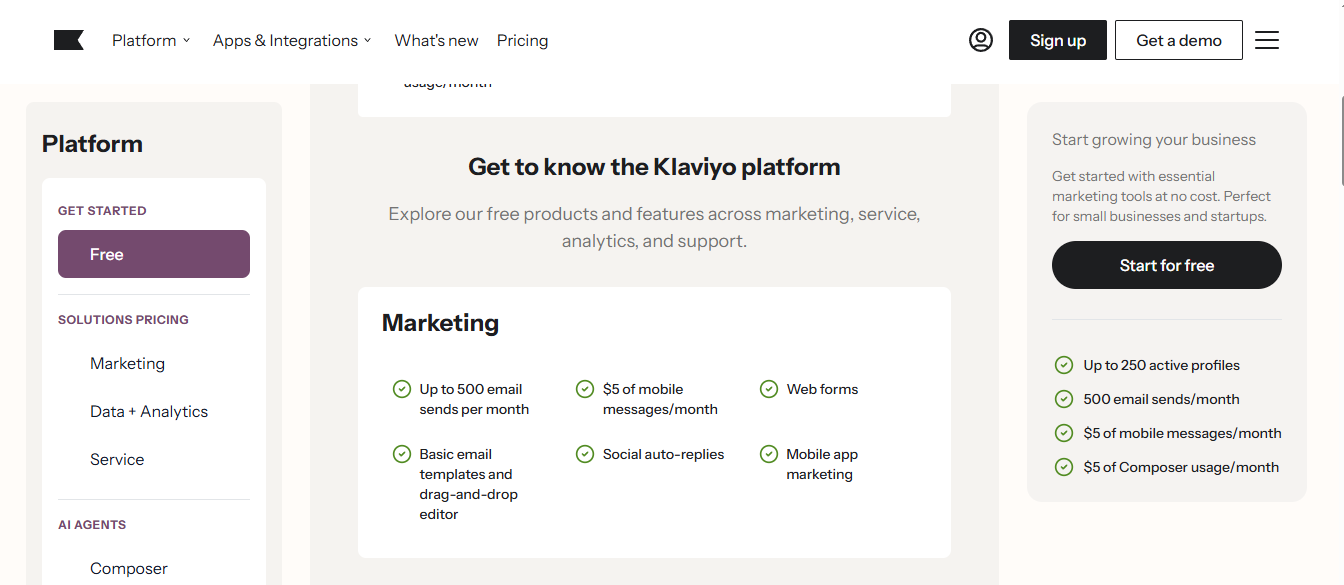
Real-world example: Klaviyo offers email and SMS marketing tools that integrate with Shopify.
This Is Where Overlap Starts Hiding
Accumulating apps also makes it easier to miss duplication. A store may have one app for the sole purpose of reviews and eventually add another app that includes reviews but it is a part of a much larger set of features. The older app may still be installed even though something new has replaced its function.
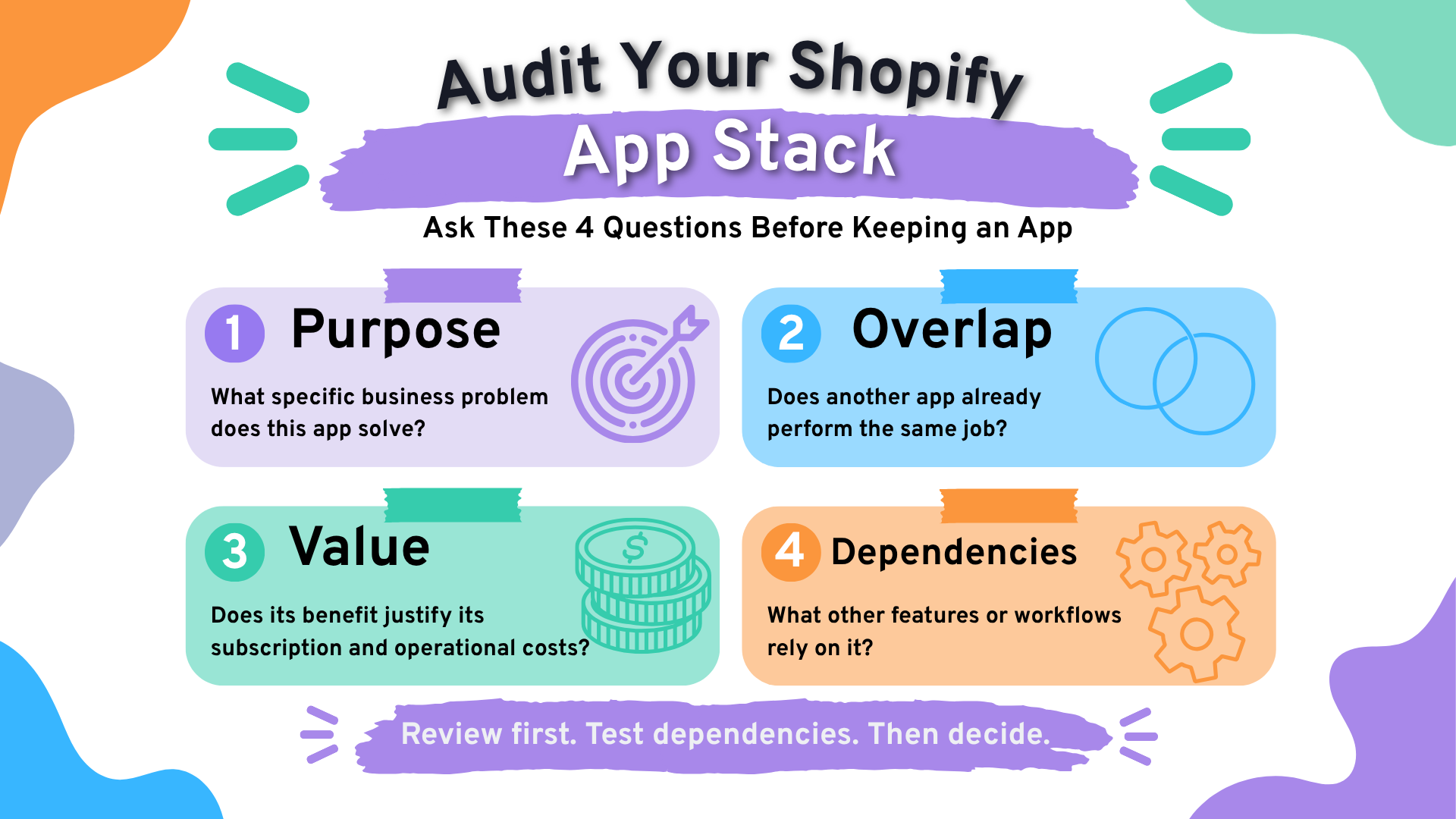
A regular app audit helps merchants spot unnecessary overlap, hidden costs, and dependencies before making changes.
The situation with Rosemira’s setup is an example of how this can happen. The company subscribed to a lot of tools before moving to a solution that better fit their needs. The lesson here is that the collection of tools was no longer working efficiently for the business.
Shopify businesses have different needs that constantly evolve as it grows. The important question to ask is “How many important jobs are these apps doing? And is there a duplicate?
Your App Stack Needs Maintenance
An app stack is not something you leave alone once you built it. As a business’s needs evolve, the tools that used to make sense might become obsolete. A brand might change its operations, replace a part of its system, or just outgrow it.
For example, Princess Polly uses Loop to help its returns process after moving to Shopify Plus. The integration helped streamline its operations while making returns convenient and easy for customers. That also means taking an app off needs to be done carefully. Shopify warns everyone that uninstalling an app can stop automations, integrations, or features that could grind or jam the business machine in the process.
Before getting rid of an app, trace the things that depends on it. It might support a feature on the storefront, feed information to another app, or have an automation that nobody remembers setting up. The trick here is to disable the app in a controlled test space if possible, and test all the different phases of the customer journey before completely phasing it out. This helps you find out the hidden dependencies before they become broken parts of your business.
The Best App Stack Is Built in Layers
A store that has plenty of apps does not automatically mean it’s a bad store. When its pieces integrate properly, it can work together effectively. A case study made by Shopify about a fashion brand named Blakely highlights how its integrations such as Klaviyo helped streamline data management and customer interactions.
The goal here is to build a coherent stack where every part of it has a real reason to be there. That approach prevents apps from becoming a collection of isolated purchases. Where every addition becomes a part of a coherent system that should make the store more capable, not complicated.
Speak with our team about your ecommerce vision. Partner with Mata to design, build, and launch a digital experience that delivers real results.
About the author
Kranz is a Content Writing Intern at Mata Technologies, where he focuses on research, writing, and developing content for the company’s blogposts.