

A buyer can keep sticking to your brand, like and save your products from your social media posts, and still browse your website without buying anything from you. That does not mean they don’t like the brand or that the products are bad in their view.
The gap is oftentimes between confidence and interest. Shoppers interested in fashion can’t inspect, touch, and try the product on online. They will need more information from you or from others so that they would know and feel more confidence in your product before buying it.
Here are some common myths worth challenging.
Myth 1: If They Like the Brand, They Should Be Ready to Buy
The reality: liking something and being ready to buy it are 2 different things.
A customer might discover you on social media, scan through your products and still not buy. Research conducted by Blackbox found that 48% of respondents said social media helps them find new products, but they usually buy from someone else.
That means the website should not assume that every user coming from social media or from different sources already knows what they want. Its job has to be about turning interest into understanding.
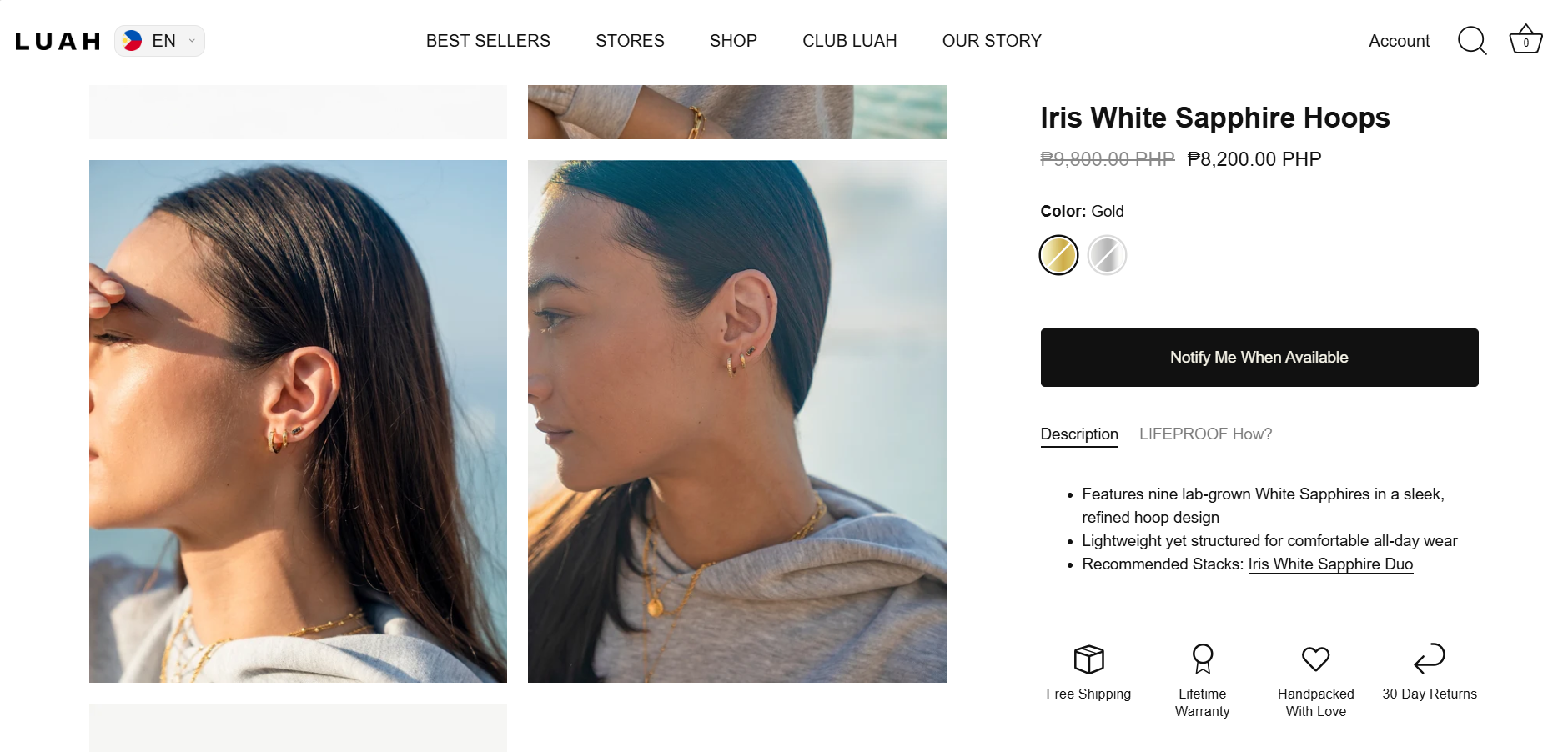
Real-world example: LUAH Jewelry provides detailed product information, including materials, dimensions, and weight, to help shoppers understand the Iris Sapphire Hoops beyond their appearance in photographs.
For Example: A random viewer sees your product on their For-You feed, that video’s job was to spark interest, to capture their attention and curiosity. Then that viewer browses through your social media and eventually their curiosity led them to your website. Social Media did its job of capturing a random viewer; your website’s job is to provide enough information that reduces the friction a buyer experiences when they are about to buy something.
The product descriptions should tell the buyer what the product actually is, who it is for and why its worth it rather than leaving all the heavy lifting to attractive photography alone.
Myth 2: Good-Looking Products Sell Themselves
The reality: fashion products are unusually dependent on visual information because customers cannot physically examine them online.
A buyer can still like the design of the product but still wonder about what the product’s fabric, proportions, color, and how it looks like when it's worn. A photograph can show the appearance, but it cannot make a customer experience it for the most part. That is the difference between seeing and understanding. Seeing is when a customer sees the photos, experiencing is when a customer can interpret those photos more from being given the information and different angles as to how it would look like on them.
Real-world example: Isabelle Ecker Jewelry uses multiple product images, measurements, and material details to help shoppers understand the necklace’s appearance, size, and construction beyond a single photograph.
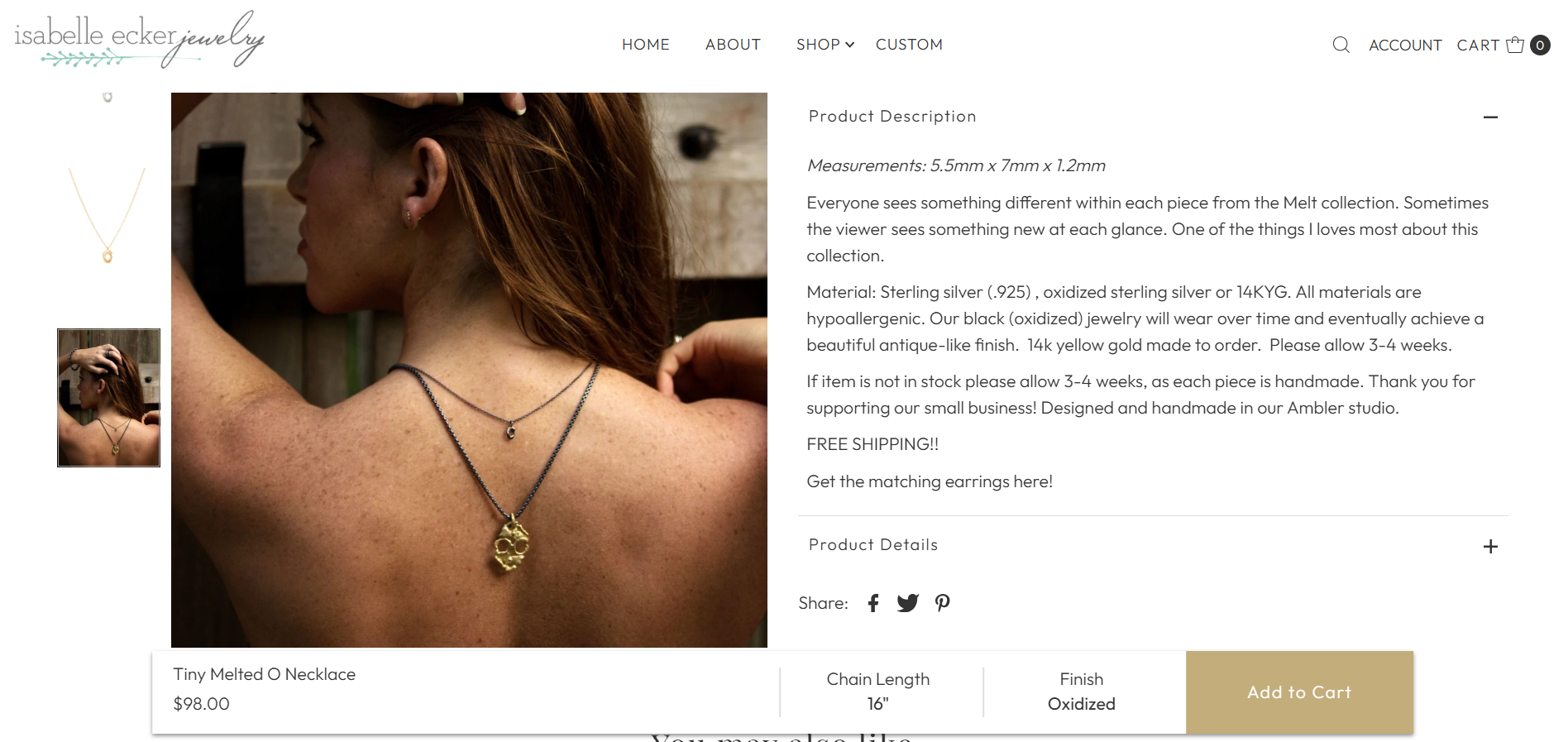
So your product page has to compensate for what the buyer can’t experience personally. Different angles, close-up shots, lifestyle photography, model shots, measurements, and more detailed product information give buyers a clearer picture of what they intend to buy.
Myth 3: Customers Who Hesitate Just Need More Persuasion
The reality: sometimes they need less persuasion and more certainty.
Fashion creates some uncertainties that other products might not. A customer can’t know exactly how a product will fit on them from a photo. Research conducted by Baymard found that buyers can hesitate if they do not feel confident about its sizing. You must keep this essential question in mind when providing information on your website: What question is preventing the person from moving forward? What makes them hesitate? If I were to buy right now, what is this brand not telling me?
It is best if you anticipate a customer’s potential questions and answer those ahead of time before a customer even thinks of those questions. Give them the details of the product like its measurements, sizing, fit, and other detailed information to help them understand how the product might look and feel like when they wear it on themselves. The goal here is to remove as much of that customer’s uncertainty as possible
Myth 4: The Product Page Only Needs to Sell the Product
The reality: it also has to explain the commitment.
The buyer is not only deciding whether they like the product. They are also considering other factors such as if the price makes sense, how much the shipping will cost, how long it will take to arrive, and what happens if they find out that the product is not for them.
Unexpected expenses can also change that decision. BigCommerce found that showing extra costs are a big reason buyers abandon carts, while Shopify tells us that online fashion purchases carry risks around sizing, color, fit, and style. Clear and detailed information for returns can reduce some of that perceived risk.
Real-world example: AMAMI Filipino Jewelry outlines its shipping, delivery, and exchange policies in its FAQ, helping shoppers understand the costs, timelines, and conditions involved before committing to a purchase.
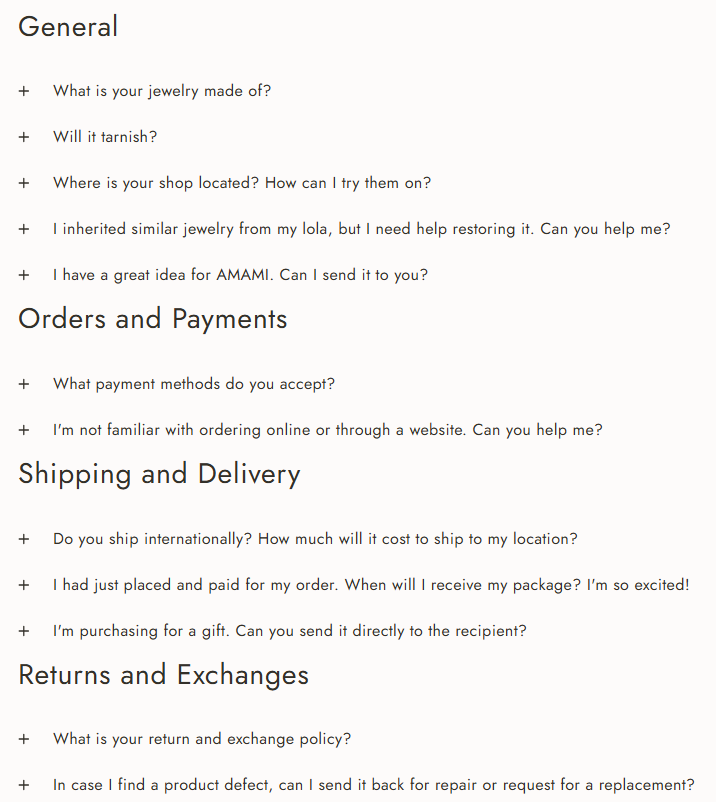
Important details such as pricing, shipping, returns, and exchanges should be information be provided upfront and it should not be something that customers have to constantly hunt down for your brand.
Myth 5: Customers Trust the Brand Because They Found It on Social Media
The reality: recognition is not the same as trust in the transaction.
Someone may recognize your social media account and still be unfamiliar with your website. Before they give their personal information and eventually their money to your website, buyers look for evidence that your business is legitimate.
Reviews can help here because they give information that the business cannot produce directly. Customer reviews, photos, ratings, and testimonials help show other buyers what the product is like. According to Shopify, reviews can help confirm a product’s qualities and provide experiences from previous buyers.
Brands can control what they can say about themselves and their products but what it cannot credibly say for themselves is the confidence their buyers have for them. The Brand’s job is to create the environment that allows customer reviews to sprout.
Your website cannot manufacture all of that confidence. Let previous buyers prove it’s worth.
The Real Gap Is Between “I Like It” and “I’m Comfortable Buying It”
Someone can genuinely like what a brand is selling, but that interest still has to survive the questions that person starts asking when they’re considering buying from that brand.
Do I know what I am getting? How do I look wearing it? Do I know how the size will be? Does the price make sense? What will the final cost be? Can I trust this brand? What happens if the product is not the right fit for me?
Product pages have to answer those questions before a customer has to think of them. The website’s job is to provide enough information and create the conditions for confidence that other buyers would provide their own reviews to strengthen the confidence of future buyers.
The goal is not only about making buyers like your brand more, but it is also about making buying from the brand feel easy with confidence.
About the author
Kranz is a Content Writing Intern at Mata, where he focuses on research, writing, and developing content for the company’s blog posts.